

When patients visit our clinic having decided on breast implant removal,
they are often far more cautious and feel much more at a loss than when they first underwent augmentation surgery.
Reasons for choosing surgery vary from person to person—some experience discomfort due to implant rupture or capsular contracture,
while others simply wish to feel unburdened and return to their natural body without implants.
The important thing is that implant removal surgery must be approached
with entirely different criteria than when the implants were first placed.
This is because the scope and technique of surgery change completely
depending on why the patient desires removal and the current internal condition of the breasts.
Here, we summarize the key points you need to know regarding the two most common concerns: the criteria for capsule removal and bleeding management.
1. A normal capsule is not forcibly removed
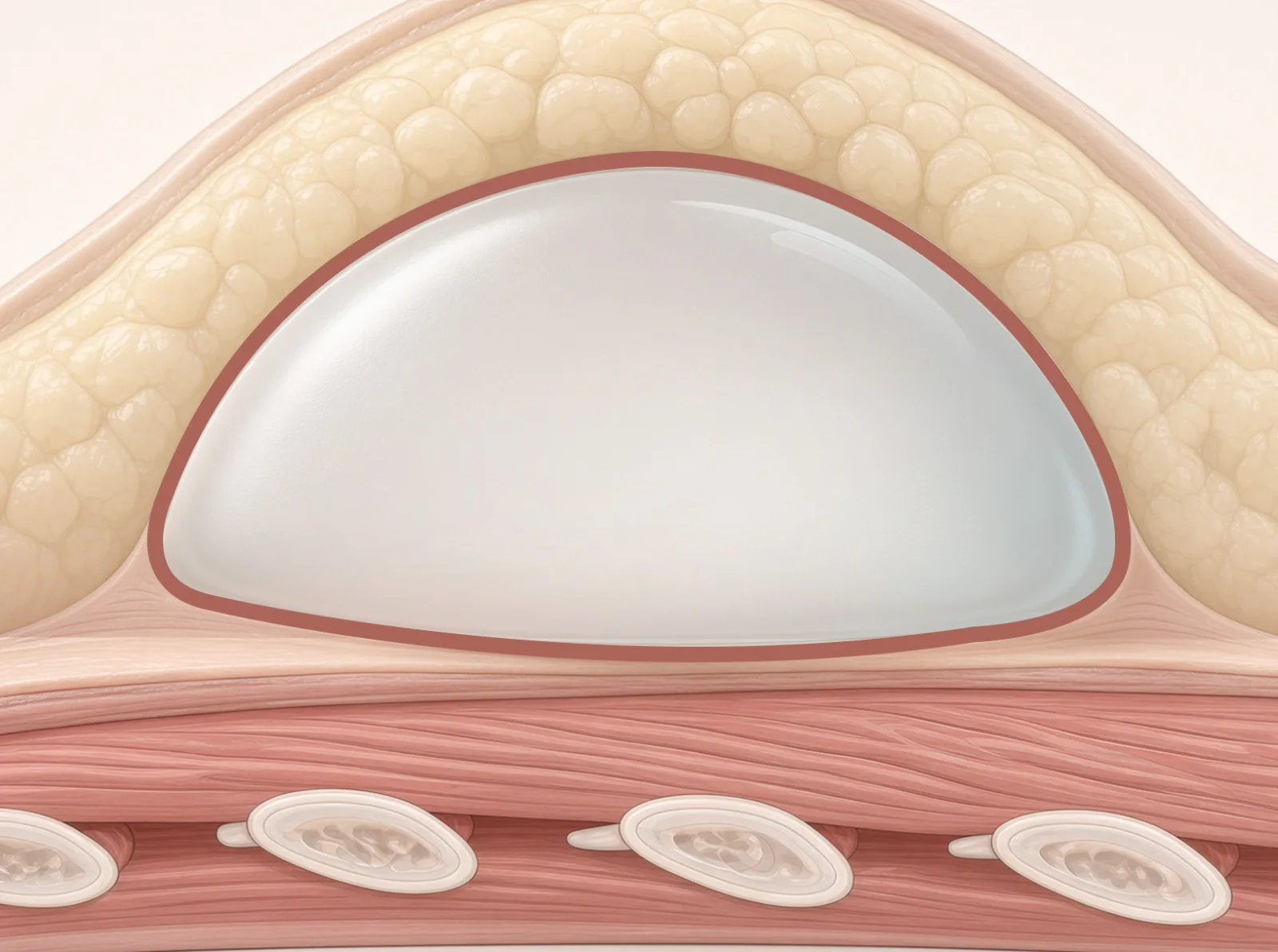
When an implant enters our body, a thin protective barrier known as the "capsule" forms around it as part of the natural immune response.
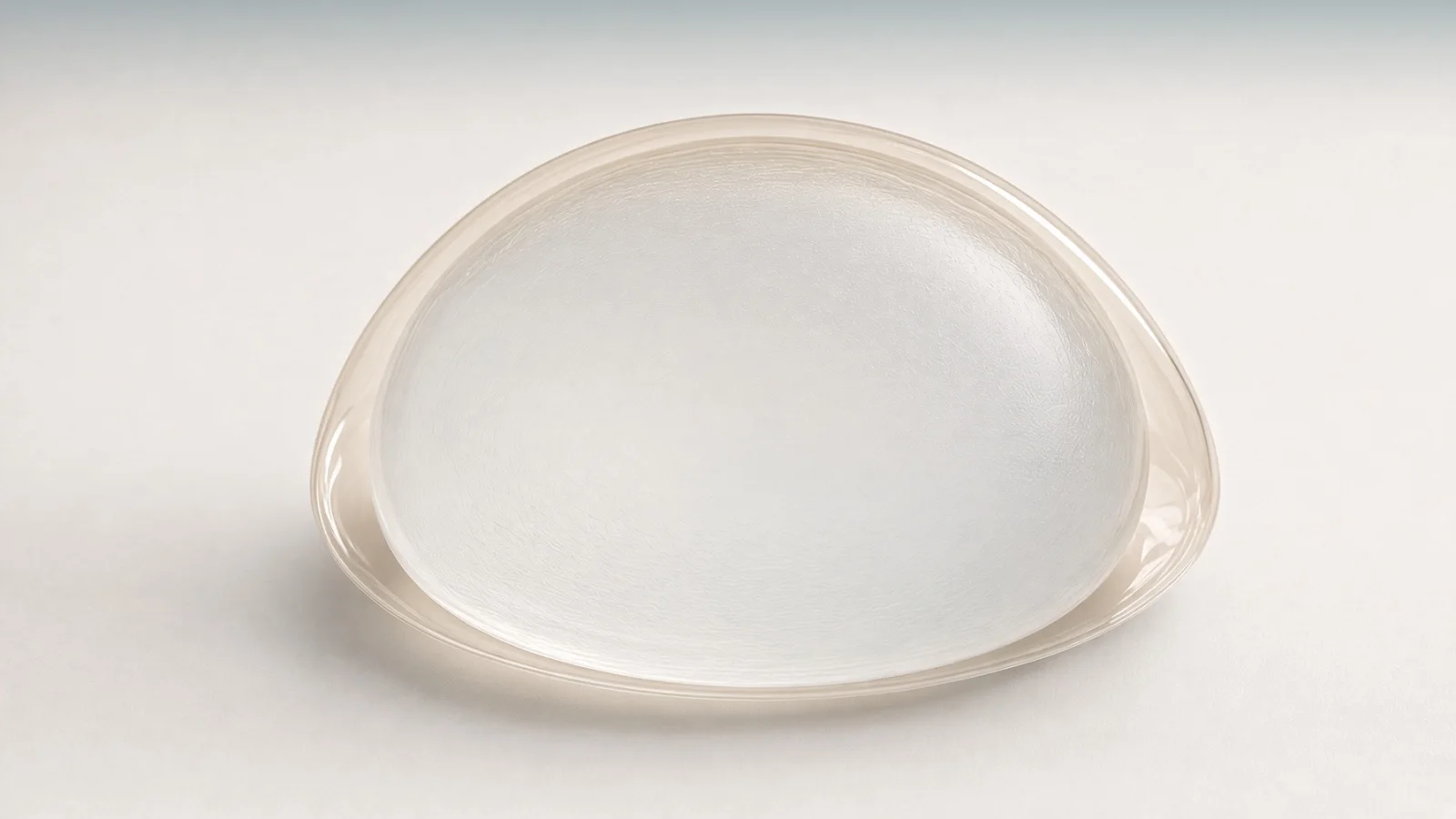
Online, conflicting statements such as "It is only safe if 100% of the capsule is removed" or "Removing it causes a pneumothorax" may have left you confused.
To give you the bottom line first: it is not necessary to remove the entire capsule in every case.
This is the same principle emphasized in the joint safety recommendations of the International Society of Aesthetic Plastic Surgery (ISAPS) and the American Society for Aesthetic Plastic Surgery (The Aesthetic Society).
If the capsule is thin, soft, and healthy, yet firmly adhered to the ribs and chest wall,
leaving it in place rather than forcibly stripping it away is actually much safer.
This is because aggressive dissection of the capsule along the chest wall can, in rare instances,
lead to a pneumothorax, where air leaks into the pleural space surrounding the lungs.
In large-scale clinical data, the incidence of pneumothorax following capsulectomy is very low—less than 0.1%—
yet there is no reason to take on unnecessary risk.
Preserving a normal capsule is not an incomplete surgery;
it is a sound medical decision made after carefully weighing safety and clinical benefits.
2. Three criteria when capsule removal is essential
Sometimes, patients assume that simply because an implant has ruptured, the entire capsule must be removed as well.
However, even if a silicone implant has ruptured, as long as the leaked gel can be thoroughly cleansed and cleared,
a healthy capsule is often left intact.
The criterion that determines removal is not the implant itself, but the "condition of the capsule."
- When implant-associated disease (such as lymphoma) is suspected
If neoplastic changes in the capsule are confirmed or suspected,
an "en bloc" capsulectomy is performed to remove the implant and the capsule together as a single, intact unit without rupturing it.
- When the capsule is aged and calcification has developed
If years have passed since surgery and calcium deposits form within the capsule, it can harden like stone, necessitating removal.
- When the capsule has become thick and hard due to capsular contracture
If a thickened capsule is left behind, it can feel like a firm lump even after the implant is removed or distort the shape of the breast.
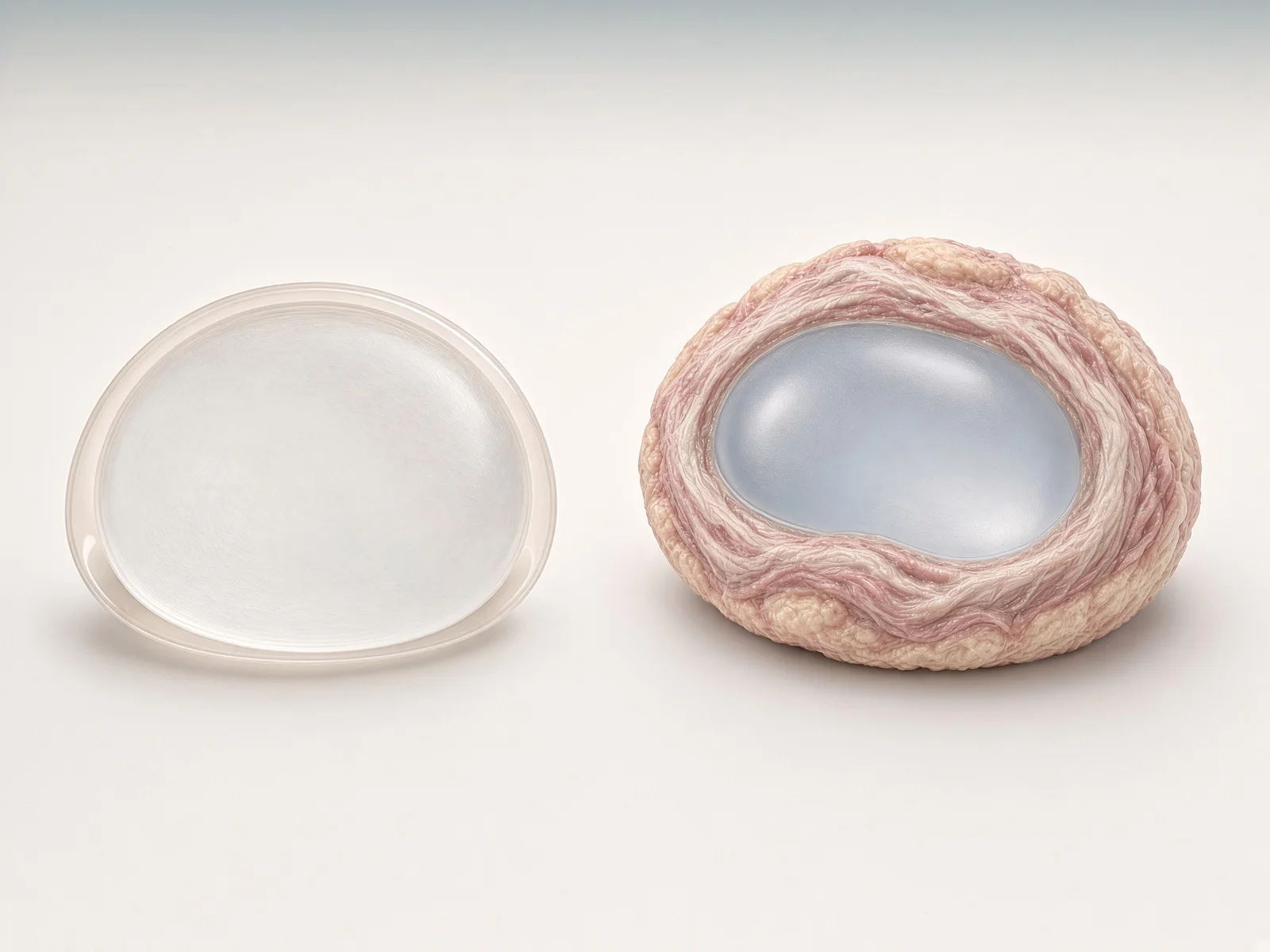
The most crucial surgical technique here is delicately dissecting only the problematic, pathological capsule
while preserving surrounding healthy breast tissue as much as possible.
Patients who have had implants for a long time often worry that their own breast tissue has been damaged,
but once the underlying problem is precisely addressed, the tissue recovers and settles into place far more healthily than expected.
3. "Intraoperative bleeding control" that determines a smooth recovery
A representative complication that can occur after implant removal surgery is a hematoma, where blood pools in the surgical site.
Indeed, studies report that the incidence of hematoma is higher when capsulectomy is performed concurrently compared to simple implant removal alone.
Ultimately, surgical precision depends on how meticulously bleeding is controlled during the procedure.
Under endoscopic guidance or direct visualization, tissue must be dissected delicately little by little,
and even the smallest bleeding point must be coagulated immediately upon detection.
While this requires more time and deep concentration from the surgeon,
the more meticulous this process is, the less postoperative pain and swelling you will experience, making recovery substantially smoother and more comfortable.
Key points to verify during your pre-operative consultation
Breast implant removal is not a simple procedure that ends with just taking the implants out.
To ensure safe and satisfying results, please be sure to review the following four points before surgery:
- Have the current conditions of your implants and capsules been accurately evaluated through advanced imaging such as ultrasound or MRI?
- To what extent is the capsule planned to be removed, and what are the pros and cons of that approach?
- What dissection and hemostasis techniques are utilized during surgery to minimize bleeding and hematoma?
- Is there a system in place that allows immediate communication with the medical team and prompt management if any abnormal signs arise after surgery?
A plastic surgeon with a profound understanding of breast anatomy
should listen attentively to your reasons for choosing removal and clearly explain a customized
capsule management plan that is safest for your current condition.
Related procedure