


"I have a very slender frame—if I get surgery, won't it look unnatural and like two bowls turned upside down?"
This is the most common concern shared by slender patients who visit our consultation room.
To answer simply: having a petite, slender body type is by no means a disadvantage in breast surgery.
In fact, because you start with less natural volume, the postoperative change in three-dimensional contour is all the more noticeable,
offering the distinct advantage of dramatically enhancing your overall body proportions.
However, there is one important factor that must be carefully addressed.
Because the layer of subcutaneous fat and glandular tissue that naturally cushions the implant is thin, the implant's outer edges can become visible, or
folds can be felt through the thin skin—a phenomenon known as rippling.
For this reason, the more slender your frame, the more essential it is to design the implant's position, physical properties, and size with utmost precision to suit your body.
1. Why are implant edges more easily noticeable in slender body types?
A simple analogy is the difference between a thin summer sheet and a thick winter duvet.
If you place a ball under a thin single-layer sheet, its round outline shows through clearly;
under a plush winter duvet, however, the contours are gently cushioned and softly concealed.

The skin of a slender individual is closer to that thin summer sheet.
This is because the natural tissue layer available to cover the implant is very lean.
In particular, the inner chest (cleavage line) and the lower outer edges are naturally the thinnest areas of skin and tissue on the body.
Ultimately, success in breast surgery for slender patients hinges on one crucial point: "How seamlessly can we cover these two thin areas?"
2. Three Key Essentials for Creating a Natural, Undetectable Result
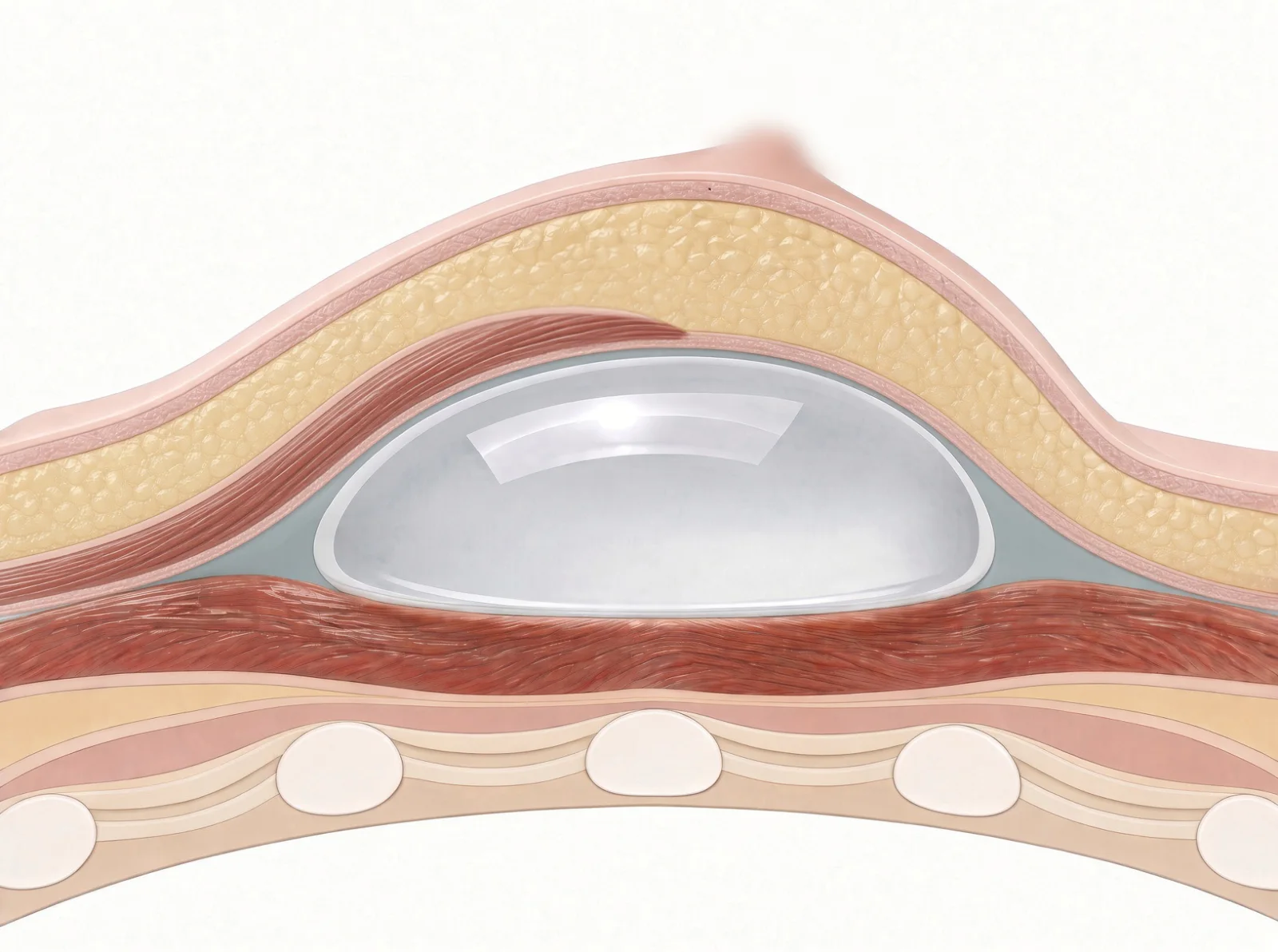
First, the 'Dual-Plane' technique to place the implant beneath the muscle
In slender frames, placing an implant directly over the pectoralis major muscle leaves it right beneath thin skin, making it prone to showing through.
Therefore, we utilize the dual-plane approach—positioning the implant under the substantial pectoralis major muscle—
allowing the muscle to serve as an extra, reassuring layer of cushioning.
Second, selecting the 'implant properties' tailored to tissue thickness and desired feel
Firm implants with a high filling ratio (full-fill) are advantageous for preventing rippling,
yet they may feel somewhat firm to the touch in very slender patients.
If you prefer a softer, more supple feel, you can select an implant with softer cohesiveness,
paired with complementary solutions to reinforce areas with thinner coverage.
Third, combining targeted 'autologous fat grafting' along the cleavage and transition zones (hybrid augmentation)
This method delicately layers purified micro-fat along the inner cleavage and upper pole transitions—areas where implants alone may not provide seamless coverage.
By softly concealing the implant edges, unnatural sensations are significantly minimized,
and a naturally graceful cleavage is achieved without the need to push the breasts together.
Even in slender individuals, we carefully check areas such as the inner thighs or saddlebags beforehand to identify suitable donor fat.
3. What determines the right implant size?
Because slender patients have often wished for greater breast volume for a long time,
it is not uncommon to request the largest possible size during consultations.
However, the size of a breast implant should never be guided by ambition; it must be determined by the width of your rib cage.
Attempting to place an excessively large implant when the natural chest width (breast base) is narrow
can cause the implant to spill out laterally or
lead to bottoming-out, where the inframammary fold sags under excessive weight.
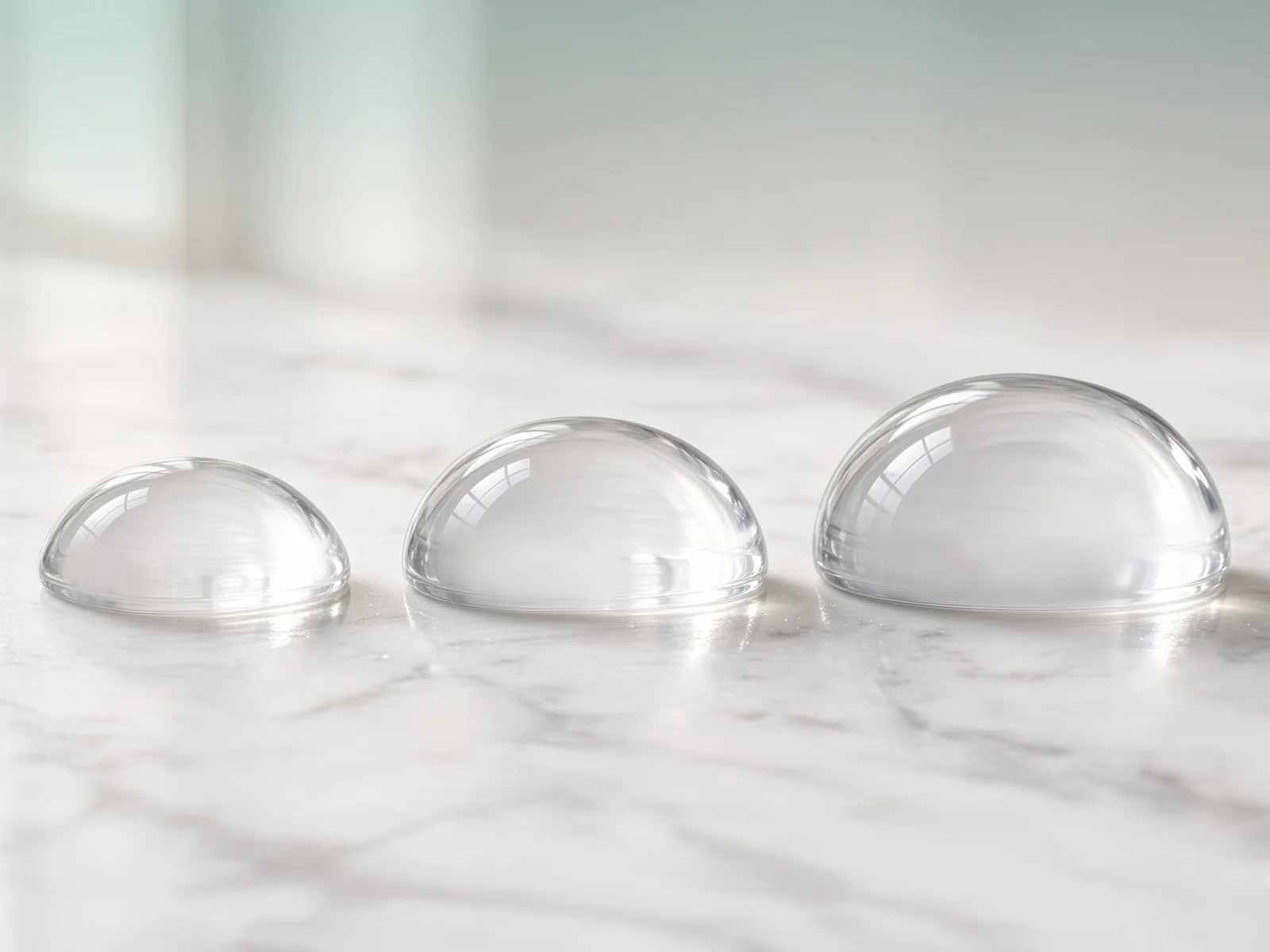
Rather than a high-profile projection that protrudes excessively forward,
a Moderate Plus or Demi profile—providing harmonious volume paired with a stable, well-proportioned width—
often integrates far more naturally with a slender frame.
Finding the ideal size that can be safely accommodated within your chest circumference is of paramount importance.
Key Points to Confirm During Your Consultation
- Which anatomical plane (such as dual-plane) will be used, and why that specific approach is necessary for your body type
- What implant fill ratio and gel cohesiveness best suit your skin thickness
- Whether your body type would benefit from concurrent fat grafting, and if suitable donor sites are available
- Whether the implant diameter (base width) remains safely within your chest frame
An experienced breast surgery specialist, when caring for a slender patient, will not merely recommend a size,
but will present a clear, tailored solution for "how to smoothly conceal implant edges beneath delicate tissue."
Related procedure