

Preservation breast augmentation, which aims to protect the ligaments that support the breast and the chest muscle as much as possible, is drawing attention.
Protecting tissue is clearly the right direction. But what is actually preserved, and what needs to be released, has to be checked separately.
On November 8, 2026, Dr. Han Seung-beom, lead surgeon of Amorata Plastic Surgery, presented a study that examined this question through anatomy and the literature at PRS KOREA 2026, the international congress marking the 60th anniversary of the Korean Society of Plastic and Reconstructive Surgeons.
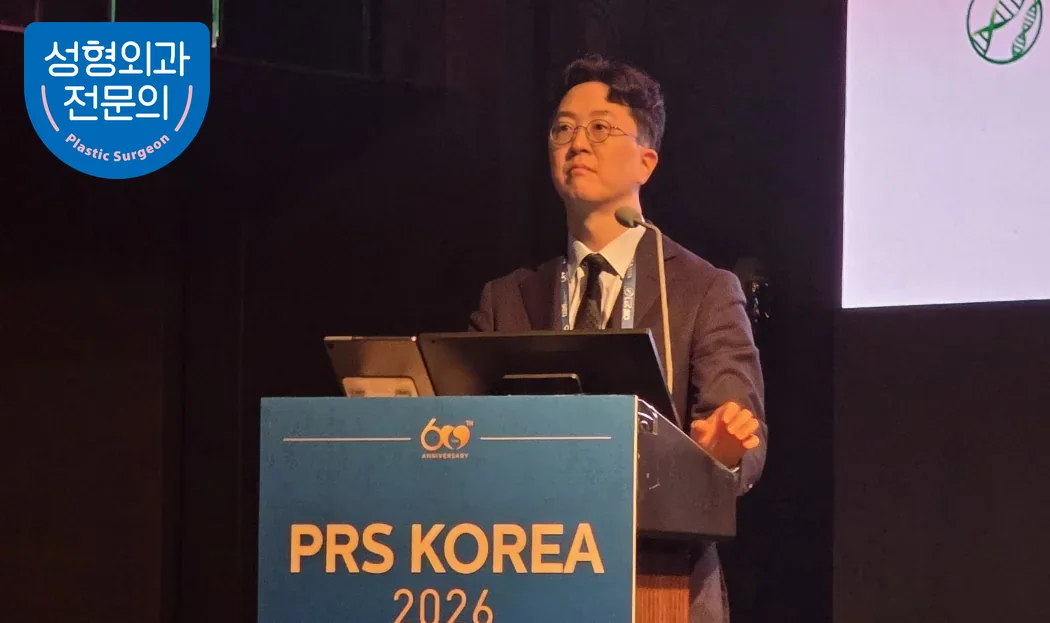
Presentation overview
- Congress: PRS KOREA 2026 (International Congress of the Korean Society of Plastic and Reconstructive Surgeons, 60th anniversary)
- Date and time: Sunday, November 8, 2026, 14:00–14:15, the first talk of the opening day’s breast surgery session
- Venue: Grand InterContinental Seoul Parnas, Room 3
- Session: Aesthetic Breast 1 — Preservation Breast Augmentation: Myth or Fact?
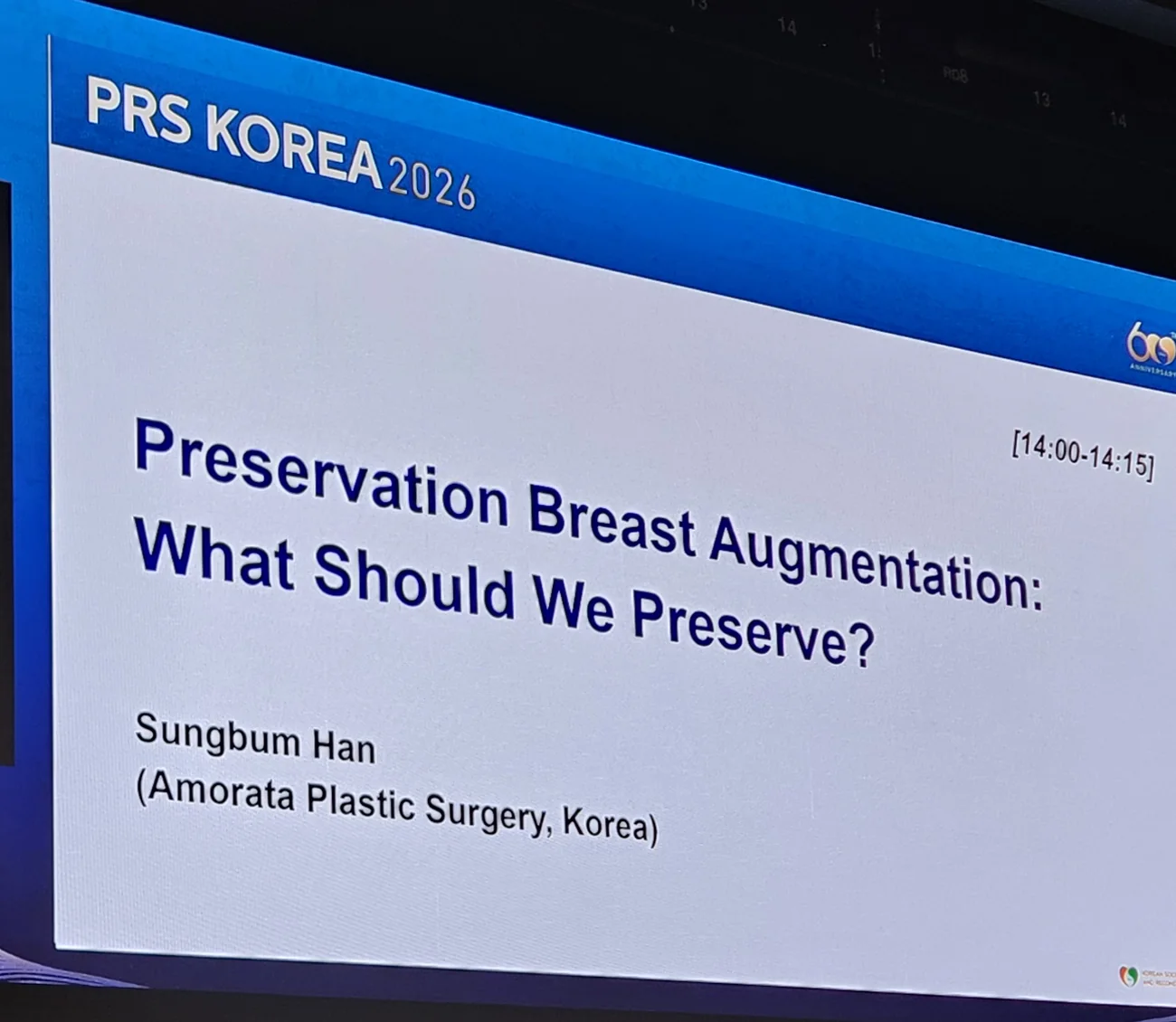
- Title: Preservation Breast Augmentation: What Should We Preserve?
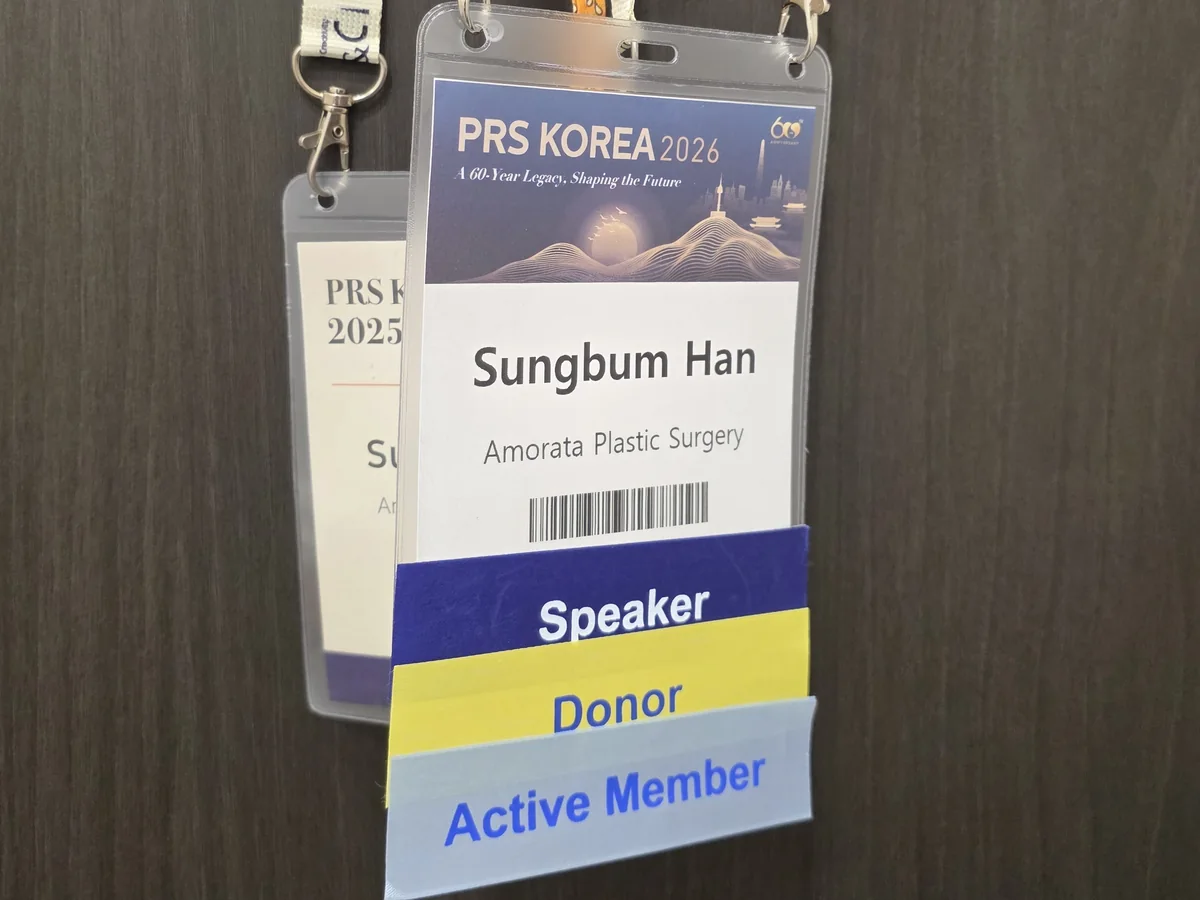
- Speaker: Dr. Han Seung-beom (listed in the program as Sungbum Han, Amorata Plastic Surgery)
What does preservation breast augmentation try to protect?
Preservation breast augmentation creates the space for the implant by stretching the tissue and cutting as little as possible. It aims to protect three main structures:
- the supporting ligaments that hold up the breast
- the pectoralis major, the chest muscle
- the nerves and blood vessels that run to the nipple
The session was titled “Preservation Breast Augmentation: Myth or Fact?” To answer that question, Dr. Han reviewed the literature and research on what preservation breast augmentation needs in order to work as intended.
Three questions Dr. Han raised
1. Does the implant really sit in the planned layer?
The fat layer, fascia and muscle around the breast lie only a few millimeters apart.
If an instrument is pushed in without seeing, it can stray from the planned layer. Dr. Han stressed that the dissection must be done while looking directly at the area through an endoscope to reach the planned layer accurately.
2. Does the pocket fit the implant, and how much of the septa should be released?
If all the septa and ligaments inside the breast are left as they are, there may not be enough space for the implant.
Some Korean patients have firm septa. He explained that what to keep and which parts to release must therefore be chosen and adjusted for each person.
3. Can the stretched tissue withstand the force?
Stretching tissue instead of cutting it starts from the assumption that the tissue can withstand that force.
Dr. Han introduced a study (Bhattarai et al., 2026) in which about 82% of 77 breast support tissue samples tore under a relatively weak force. This is why the actual response of the tissue during stretching needs to be checked.
Why the endoscope matters
The endoscope has been used in breast augmentation since the 1990s.
Dissecting while looking directly at the surgical area makes it possible to limit the dissection to what is needed and to check bleeding on the spot. This direct confirmation is also the basis for keeping the goal of tissue preservation in the actual operation.
Conclusion: not keeping everything, but checking and choosing
“I agree with the direction of preserving tissue, but keeping every tissue unconditionally is not always desirable.”
“Which structures to preserve and how much to dissect must be confirmed and judged directly, and the anatomical and clinical evidence behind it must keep being built up.”
— Dr. Han Seung-beom, from his presentation at PRS KOREA 2026 (as reported by Medisobi News)
At Amorata
For breast augmentation through the armpit incision, we dissect while looking inside with Wolf and Storz endoscopes. Through the inframammary incision, we dissect while seeing the area directly.
At consultation, we look at the shape of the chest wall, the thickness of the tissue and the size of the implant together. What to keep and what to release is also decided to suit each person’s body.
You can read more about the surgery on our Breast Augmentation and Revision Breast Surgery pages.
Related columns: Hematoma Emergency Care · Can breast implants be larger than your rib cage?
Questions to ask at your consultation
- Which layer the implant will be placed in
- Whether the dissection is done while seeing it directly, with an endoscope or by eye
- Which tissues will be kept, and which parts will be released and by how much
- Whether your tissue is thick enough to cover the implant well
Related article
Related procedure